

Editor’s Note: Most businesses don’t fail overnight. They fall behind quietly until one day, the damage is obvious.
That’s exactly what happened to luxury fashion store Barneys New York. For decades, it looked untouchable. Then the world changed, and Barneys didn’t change with it.
Today, I want to introduce Marc Chaikin, a longtime Wall Street analyst who has spent decades studying what happens when markets shift and investors keep using the same old playbook. He uses the Barneys story to explain a problem investors face right now.
Market strategies that once felt safe can slowly lose their edge without anyone noticing. So, Marc’s message is simple: The biggest mistakes investors make aren’t dramatic. They’re gradual.
If you’ve ever wondered whether the market is changing in ways most investors aren’t prepared for yet, this is something you’ll want to understand sooner rather than later.
That’s why Marc will be hosting a live briefing on Tuesday, February 17, at 10 a.m. Eastern, where he’ll explain what he sees coming next for stocks and how investors can prepare. You can reserve your spot right here.
Now, I’ll turn it over to Marc…
*********************
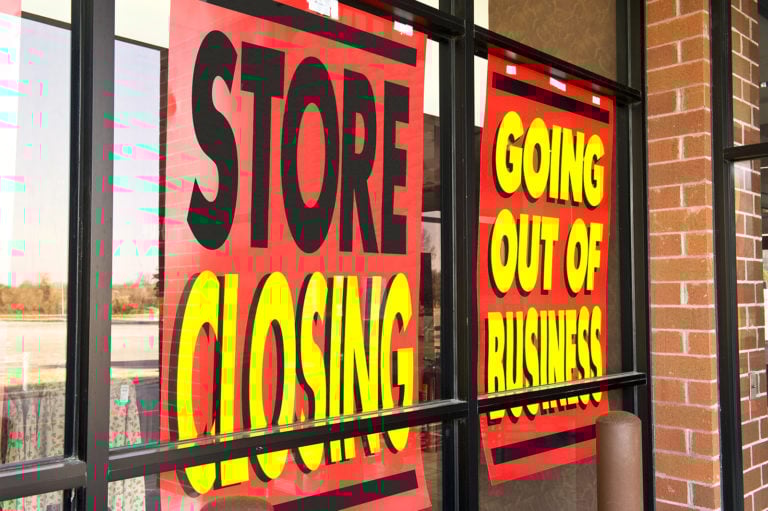
On the window sign of an iconic luxury-retail store on Madison Avenue, the message was loud and clear…
“EVERYTHING MUST BE SOLD! GOODBUYS, THEN GOODBYE!”
For decades, Barneys New York had been the premier fashion store in the city. The company’s Madison Avenue flagship store boasted nine floors and about 275,000 square feet of retail space.
Barneys started out as a men’s discount clothing store in Manhattan in 1923. Over the following decades, it transformed and grew into a luxury-retail powerhouse.
By the 1980s, the company had developed a reputation for introducing the best global luxury brands to an increasingly wealthy American consumer market.
Its flagship New York store featured wall-to-wall designer labels – from Giorgio Armani to Balenciaga. If it was expensive, Barneys had it.
In short, it was a luxury shopper’s paradise.
The Illusion of an Unbreakable Business
The store often featured in the hit HBO series Sex and the City. Its fashionista lead character, Carrie Bradshaw (played by Sarah Jessica Parker), considered Barneys one of her favorite places to shop.
But on February 23, 2020, Barneys New York closed…
And so did the company’s other stores in New York, along with those in San Francisco and Beverly Hills. All its branches closed, all on the same day.
Fashion-industry figures called it the end of an era.
But it was ultimately a failure to adapt to changing times…
When Barneys opened its gigantic store on Madison Avenue in 1993, it set the bar for luxury shopping in New York.
But that came at a price – in the form of costly rent.
You see, Barneys didn’t own the property it did business on. Most of the company’s money was tied up in expensive goods kept in inventory. Barneys sold those goods at huge markups to store customers.
The company’s annual revenue reached nearly $1 billion at its height. One-third of that figure came from Madison Avenue alone.
This allowed Barneys to make good on millions of dollars of rent – including $16 million a year just for the Madison Avenue store.
The business model worked… as long as people kept going into the stores to buy goods.
But then the internet came along – and took off. It gave rise to e-commerce and a strategy called “direct to consumer” (DTC).
Brands could now use the internet to sell products directly to their customers. This allowed them to cut out the middlemen – typically, owners of retail establishments.
It didn’t take long for consumers to realize they could buy luxury goods – the same ones found on Barneys’ store shelves – from authorized online retailers.
These online retailers often displayed more designs and models than physical stores could keep in stock. And, of course, customers could shop right from home.
Foot traffic to Barneys declined. And then, the landlord doubled the rent at the flagship Madison Avenue store. It was too much to bear.
In mid-2019, the company filed for bankruptcy. And its stores wound down… until shuttering in February 2020.
Barneys became a cautionary tale in the $1.8 trillion global fashion industry. Even a nearly century-old business institution could end up in the trash bin of history if it failed to adapt to changing times.
Why This Same Mistake Shows Up in the Market
Of course, the fashion industry didn’t go anywhere. It’s still a big business.
Folks, my point with this story is simple…
The world around us is always changing. It was true when the iconic Barneys closed in 2020. And it’ll continue to be true in 2026.
The investment decisions we make throughout the year will determine whether we keep up with the changes.
And that’s exactly why I’m stepping forward next week with an urgent new market briefing.
Because just as Barneys failed to adapt to a changing world, many investors today are relying on tools that no longer work — especially as we head into what I believe could be a volatile March–April period for stocks.
On Tuesday, February 17, at 10 a.m. Eastern, I’ll be hosting a free live broadcast to explain what’s changing beneath the surface of the market… why not all stocks will be hit the same… and how a small group of companies could emerge stronger — and far more profitable — if you know what to look for.
I’ll also be sharing a brand-new tool to identify these opportunities, which you’ll be able to try out for free if you sign up, along with two free stock recommendations during the event.
Click here to reserve your seat for this free broadcast — and I’ll see you there.
Good investing,
Marc Chaikin
Market Expert & Founder, Chaikin Analytics
P.S. We’ll have Marc back here again to share more about how the market is changing and what investors should be watching next. If you haven’t already, make sure you register for his free live briefing on Tuesday, February 17, at 10 a.m. Eastern, so you don’t miss his full outlook and the tools he’s using right now.


