
Listen to the audio version of this article (generated by AI).
Editor’s Note: There’s a quiet arms race underway on Wall Street, and it’s not about who trades fastest anymore.
It’s about who sees patterns first.
And the tools once reserved for elite hedge funds – massive data processing, pattern recognition, and machine learning – are becoming more accessible to everyday investors.
As technology changes how opportunities are identified, the edge is moving away from pure speed and toward smarter, data-driven insight.
Understanding and applying that shift will be key to navigating what comes next.
TradeSmith CEO Keith Kaplan is joining us to share how AI is turning massive data sets into predictive signals. He explains how his team is using AI to identify specific “signals” in the market before they fully play out.
To learn the ins and outs of this system, click here to watch Keith’s AI Signals Trading Event.
The goal isn’t to chase hype; It’s to spot real, lasting advantages and use them wisely.
In a forest near the Arctic Circle, a Russian-born mathematician is building the future of trading.
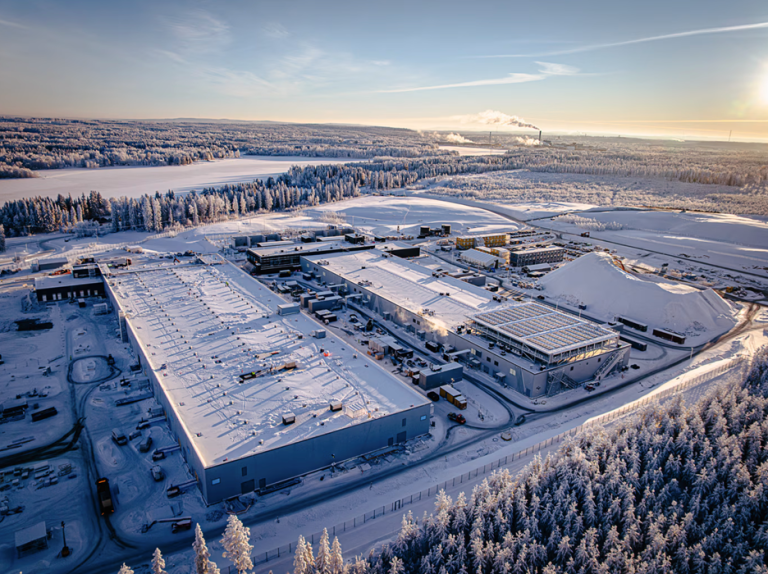
The site is in Kajaani, a small city in northern Finland. The first of five data centers there is roughly the size of three football fields. It’s set to go live this year. A second one, next door, is nearly finished and will come online in 2027.
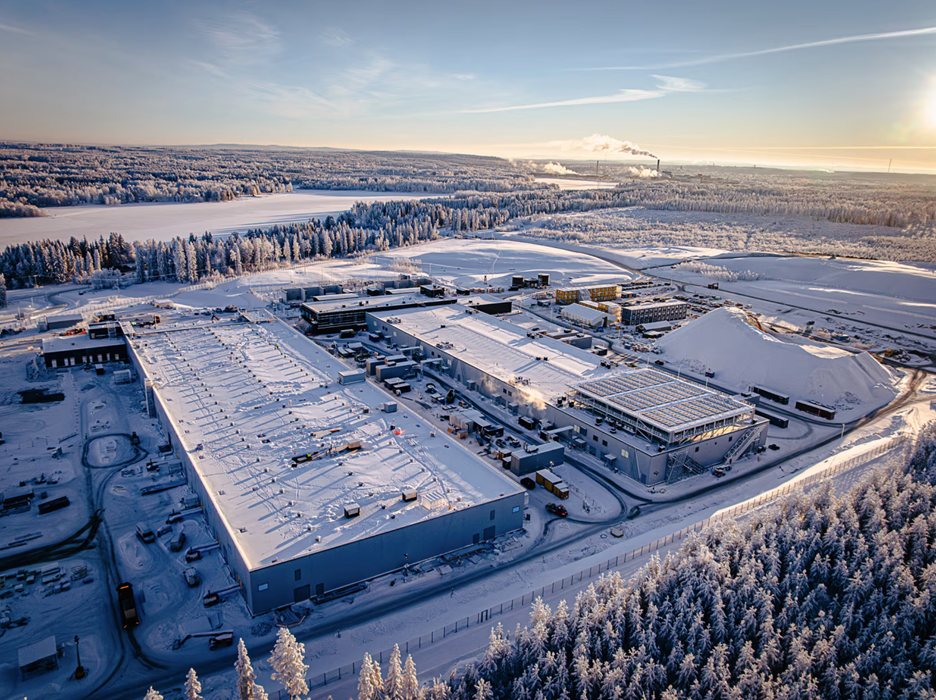
One of XTX’s giant data centers in Finland (Source: XTX)
The man behind them is Alex Gerko. He’s worth an estimated $12 billion. And his hedge fund, XTX Markets, doesn’t employ a single human trader.
Gerko spent the 2000s trading at Deutsche Bank. But he’d come to believe the race to shave microseconds off trade execution – the obsession of Wall Street’s high-frequency firms – was a dead end. He wanted to compete on intelligence, not speed.
So he moved to London and founded XTX in 2015. Its employees weren’t traders. They were coders and researchers who built AI models to predict price moves milliseconds, minutes, and hours into the future. Every decision was made by an algorithm.
Last year, XTX’s UK business generated $5.3 billion in revenue and $2.3 billion in profit. It traded an average of $250 billion a day across stocks, bonds, currencies, and crypto – with just 250 employees.
That’s more profit per head than quant giants Citadel or Jane Street.
Which is why Gerko is doubling down. The Finland data centers are his own, built from scratch – an unusual approach in finance. To fuel them, he has amassed 25,000 AI chips, mostly from Nvidia. The northern location helps keep the machines from overheating.
He isn’t alone.
Earlier this month, Jane Street invested $1 billion in the AI-infrastructure company CoreWeave and signed a $6 billion deal to use its computing power. Bridgewater, the world’s largest hedge fund, has launched an AI-based investment fund to find trading patterns uncorrelated to human strategies.
Wall Street’s smartest, best-funded firms have all reached the same conclusion: the future of trading belongs to machines that can read patterns in market data that humans cannot.
Until recently, that kind of edge was unreachable for anyone outside an elite hedge fund.
Today, thanks to advances in AI, that’s changing. Not by outspending these hedge fund titans. But by applying the same underlying principle to finding short-term signals on liquid stocks that a regular investor can actually trade in their brokerage accounts.
That’s what my team and I at TradeSmith have spent the last 12 months developing. It’s an AI-powered trading system that finds repeating signals inside market data that point to future moves in stocks, many with historical accuracy rates of 90% or better.
We’ve built a new AI-powered trading tool that’s unearthed more than 30,000 signals across nearly 2,500 stocks.
As I showed the nearly 9,000 viewers who joined my AI Signals Trading Event last week, in a six-year backtest, a model portfolio of these signals trades delivered a 12x return.
And in 2022 — the worst year for stocks in half a century — they produced an average backtested gain of 16.6% while the S&P 500 fell nearly 20%.
If you missed it, the replay is still online. It’s packed full of trade examples, strategy details, and on-screen demos. Go here to watch it now.
Today, I want to share something I didn’t have time to cover last week – how much work and ingenuity went into building our new system.
It’s been our No. 1 priority for the development team over the past 12 months. But the seed was planted more than two decades ago, when our chief developer started asking questions about repeating market patterns.
Can the Weather in Paris Move the Stock Market?
Mike Carr has been writing code for 40 years.
He spent 20 years in the U.S. Air Force – coding nuclear missile paths, working on cryptography for the National Security Agency, and helping install an early version of the internet at the Pentagon.
When he left the military, he also became a Chartered Market Technician – a credential only about 4,500 people in the world hold. And as an investor he managed more than $200 million in client funds.
Two years ago, Mike joined TradeSmith to help us develop new analytics and strategies. And he brought with him the kernel of an idea he’d been working on for more than 20 years.
In 2003, he started collecting signal studies. Every time he spotted a repeating pattern in the data that tended to precede a move in a stock, he recorded it. He traded this way for years, constantly testing what worked and what didn’t.
Then in 2016, he read a profile of Jim Simons’ hedge fund, Renaissance Technologies. One detail stuck with him. Simons had once found a tradable signal involving the weather in Paris.
If he could find a signal in Parisian weather, the signals hiding in ordinary market data had to be almost limitless. That was the moment Mike decided to stop hunting for signals himself and build a system to hunt them at scale – one ordinary investors could actually use.
Last year, we started feeding signals he’d collected into an AI system to generate more like them. We processed more than 1 trillion database rows, running every stock through 847 individual calculations. We tested every combination of price patterns, technical indicators, and calendar conditions we could find.
Then we hit a problem we hadn’t anticipated.
Our AI signals generator delivered more 30,000 trade setups with historical accuracy rates of 75% or better. It was far too much for any trader to handle, no matter their level of experience.
So we spent the next six months solving a different problem: How do you take that many high-quality signals and deliver something every investor can use?
The answer Mike came up with was the Quality Score. It’s a 0-to-100 rating created by two machine learning models that grade each signal’s track record and assess how well today’s market conditions favor it.
Pair that with a focused model portfolio, and the flood became an actionable shortlist.
It holds three S&P 500 stocks — each one selected by an algorithm based on its Quality Score and other key factors. When an exit signal fires on one, a new trade signal takes its place.
Each trade is selected not because a human liked a chart or a story… but because an algorithm chose a mathematically optimal opportunity.
Stress Testing in an Unfriendly Environment
We backtested data from January 1, 2020 through January 30, 2026.
We covered the COVID crash, the 2022 bear market, two years of historic inflation, rising interest rates, and two wars. But here’s what the Signals Master Portfolio produced:
- A 54% compounded annual return — versus about 15% for the S&P 500 over the same six years
- A 73.4% win rate across hundreds of trades
- A maximum drawdown of 18.1% — less than the S&P 500’s maximum drawdown of 25.4%
The maximum drawdown is worth pausing on.
A lot of trading systems can generate a high compounded return in a backtest. Few can produce one that holds up better than the S&P 500 during its worst stretch. That’s the test of whether a system is managing risk effectively or just riding luck.
Which is the point of what we’ve spent the last 12 months – and, in Mike’s case, more than 20 years – developing. Hedge funds have been doing this kind of work for decades – pattern recognition, machine learning, and disciplined rotation. But until now, nothing like it has existed for regular investors.
I went into all the details during last week’s launch event. So if you haven’t already, make sure to check it out while it’s still online.
And if you were there for the event, a big thank you. You helped make it one of the most successful in TradeSmith history.
Regards,
Keith Kaplan
CEO, TradeSmith


