


Listen to the audio version of this article (generated by AI).
Hello, Reader.
John, Paul, George, Ringo… and Samsung Electronics Co.?
At first glance, the Beatles and the South Korean tech giant have little in common. Yet both offer an important lesson about expectations.
When the Beatles released Magical Mystery Tour in late 1967, the songs were well-received. It is actually my favorite of the band’s albums.
The accompanying made-for-TV film, on the other hand, was widely criticized.
Audiences expected another polished Beatles triumph, but got something experimental, surreal, and unconventional instead.
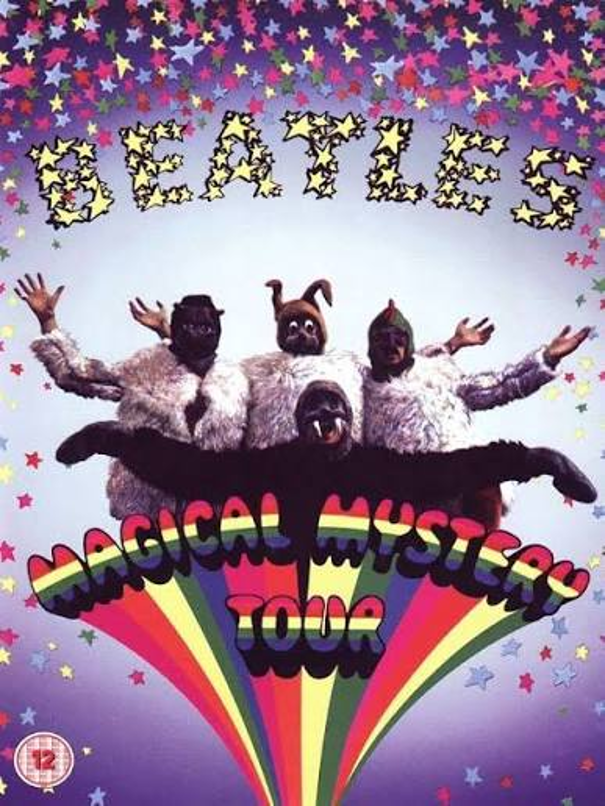
Commercially, the project was far from a failure – but it remains a fascinating case study in expectations.
The backlash to the Magical Mystery Tour TV film highlights the “expectation gap,” or the difference between what is presumed to happen and what actually happens.
In the words of the walrus-costume-wearing John Lennon, “Whatever image they have for themselves, they’re disappointed if we don’t fulfill it.”
The same dynamic plays out in financial markets. Stocks don’t move only on results – they move on the gap between results and expectations.
And that means, especially in a market driven by excitement around AI, more isn’t always better.
The AI boom is far from over, but investors may have already priced in an extraordinary future. That means even extraordinary results can disappoint if expectations have become extra-extraordinary.
This brings me to Samsung.
This week, the South Korean tech giant became a modern example of the same phenomenon: It delivered exceptional earnings results… but saw its stock fall because investors expected even more.
In today’s Smart Money, I’ll explain how the same expectation gap that humbled the Beatles is now appearing in the AI market… and why Samsung’s record results still disappointed Wall Street.
Then, I’ll share where to look for opportunity in a market where expectations may matter more than reality.
Let’s dive in…
When Expectations Become the Enemy
For the past few years, the biggest AI winners have been companies selling chips and processors. But that infrastructure is useless without huge amounts of high-performance memory.
As one of the world’s largest memory manufacturers, Samsung is a key supplier in the AI buildout, providing the high-performance memory chips needed to support the rapid expansion of AI computing.
On Tuesday, the company released preliminary second-quarter results showing operating profits jumped a massive 1,800% from a year earlier. This surge was fueled by ongoing global demand for AI memory chips.
Normally, that kind of profit surge would send a stock higher. But Samsung shares dropped sharply after the announcement.
The problem?
While the earnings guidance confirmed the AI boom was real, it didn’t provide a major upside surprise about future growth. Like the Beatles, Samsung became a victim of its own success. The company reported record revenue and profits, but investors still wanted more. Mainly, for Samsung to increase its share of the AI memory market and give shareholders a bigger payoff.
With expectations unmet, a selloff ensued.
But the selloff wasn’t limited to Samsung. The decline rippled across the broader AI supply chain, including other memory-chip makers. Micron Technology Inc. (MU) and SanDisk Corp. (SNDK) dropped 7% and 5%, respectively.
The bottom line is that Samsung delivered what should have been a dream report. Instead, investors sold chip stocks.
What resulted was a Magical Mystery Tour moment of the AI trade: Investors were not celebrating strong AI-related earnings – they were questioning whether expectations had become too high.
Memory stocks have experienced a partial rebound since the Samsung-led selloff, as some investors stepped in to “buy the dip.”
But here’s what I recommend doing instead…
The Importance of Being Early
Panic!
No, don’t really panic. Here’s what I mean…
The best investors don’t wait for obvious risks to become obvious to everyone else. They identify them early and position themselves before expectations begin to reset.
So, although it sounds as unconventional as John Lennon dressed as a walrus, I recommend a healthy dose of preemptive panicking.
I explain this strategy in much greater detail in the July issue of Fry’s Investment Report, which will be available tomorrow. You can learn how to receive it as soon as it’s released by clicking here.
In a market priced for perfection, the smartest move is to avoid the obvious risks first – like owning companies with expectations that have become almost impossible to meet.
Once you’ve done that, you can focus on opportunities where reality still has a chance to surprise on the upside.
When so much of the market’s attention, enthusiasm, and capital is concentrated in just a handful of AI favorites, opportunity often emerges in the places few investors are looking. Some of the most compelling prospects today aren’t the glamorous market leaders. Instead, they’re the overlooked companies quietly building value while everyone else chases the same high-profile names.
In fact, many of my Fry’s Investment Report recommendations are decidedly not market darlings, which means that expectations remain relatively modest. And most trade at discounted valuations despite solid business performance.
I will “tour” several of these companies in my upcoming monthly issue. So, be sure to join me at Fry’s Investment Report today, and then keep an eye on your inbox tomorrow.
If market leadership begins to broaden – as it often does after expectations become stretched – these forgotten stocks could attract fresh capital and deliver outsized returns while yesterday’s favorites struggle under the weight of impossible expectations.
Then, as the Beatles sang on Magical Mystery Tour, “Baby, you’re a rich man.”
Regards,
Eric Fry


