
The market’s biggest story isn’t where most people are looking
There’s an old story you may know that perfectly captures what’s happening in the market right now.
It’s about a man searching for his lost keys under a streetlight.
Eventually, a passerby stops to help. After a few frustrating minutes of searching, he asks, “Are you sure you lost them here?”
The man shakes his head. “No… I lost them across the street.”
“Then why are you looking here?”
“Because this is where the light is.”

Credit: breath10
It’s a simple story. But it explains a lot about human behavior.
And it explains why so many investors are poorly served by the mainstream media.
People tend to look where it’s easiest… not where the answer actually is.
This past week was a perfect example.
Most investors believe the stock market runs on interest rates. Several times a year, the financial media becomes completely fixated on the Fed – will they cut, won’t they cut, what will the Chairman say?
The coverage is relentless.
But the attention is misplaced.
Markets react to headlines, but they run on supply and demand.
When something critical becomes scarce, it can overwhelm everything else… including interest rate moves from the Federal Reserve.
That’s exactly what’s happening right now.
Because beneath the surface of the AI boom, a series of hidden supply bottlenecks is beginning to tighten. And unlike interest rates or inflation data, which tell you what already happened, these bottlenecks are shaping what happens next.
And the investors who understand where those bottlenecks are forming are the ones best positioned to profit from the next major market shift.
Global macro investing expert Eric Fry calls these critical pressure points “Golden Rivets”… the small, overlooked inputs that everything else depends on.
And right now, they’re quietly dictating where trillions of dollars will flow next.
Follow the Money – Not the Headlines
Most investors who are in tune with the AI megatrend are focused on software… on algorithms… on the promise of artificial intelligence… Given how people are using AI, and the intense media coverage of that news, that focus makes sense.
But that’s where the streetlight is shining, not where the opportunity is.
Eric says the real story is unfolding in places harder to see and far less glamorous. Better opportunities are unfolding in raw materials, such as copper, required to build the physical backbone of AI.
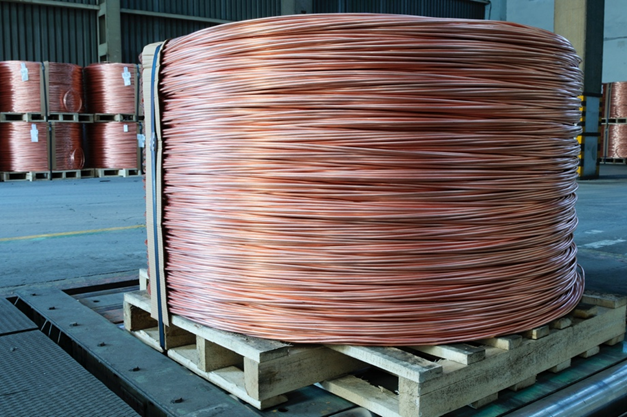
The buildout required to support AI, power grids, renewable energy, and EVs is turbocharging copper demand. S&P Global expects global annual copper demand to increase roughly 50% by 2040.
Credit: fmajor
Meanwhile, the copper mining industry has discovered or developed few meaningful copper deposits to meet that accelerated demand.
Copper is not the most exciting part of the AI story… but it might be the most essential.
Every data center… every power system… every piece of infrastructure required to scale artificial intelligence depends on it.
And according to industry estimates, we may need to mine as much copper in the next two decades as humanity has produced in the last 10,000 years combined.
That’s a supply-and-demand problem.
Supply problems tend to surface first in companies that produce the underlying materials.
A quick look at the Global X Copper Miners ETF (COPX) shows how demand has already pushed the price higher. The ETF has pulled back recently, but it remains above its 200-day moving average – a sign it is in a longer-term uptrend.
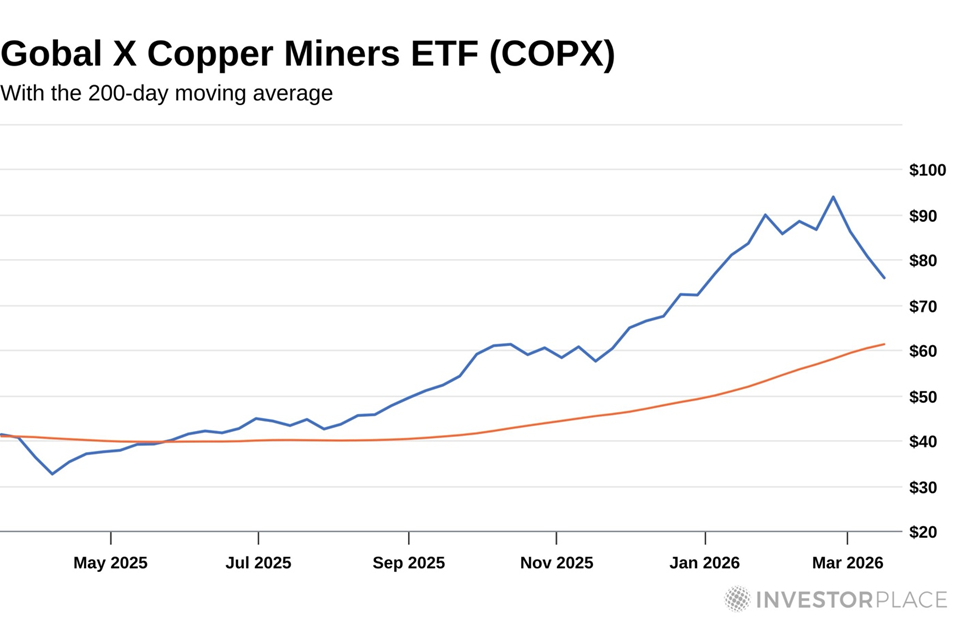
That doesn’t mean you should rush out and buy anything today, but it does illustrate the shift that’s underway – a shift to the companies supplying what the entire system can’t run without.
Not Just a Copper Story
The same story is unfolding as power systems struggle to keep up with an explosion in electricity demand. Goldman Sachs forecasts global power demand from data centers will climb 50% by 2027 and as much as 165% by the end of the decade.
And it’s unfolding within a critical component of every advanced system … memory chips … where a critical shortage, not covered by an attention-starved media complex, is already forcing some of the world’s biggest companies to compete for limited supply.
These are not abstract problems, but real, physical constraints. And they threaten to hamper the very companies that investors expect to lead the next phase of the AI megatrend.
It’s supply and demand.
And where you find critical choke points, you find a new class of winners. The gains won’t come to the companies spending the most money, but to the companies supplying what no one else can easily replace.
That’s why Eric believes we are on the verge of a major market “regime change”… one where capital begins to rotate away from the obvious winners of the AI boom and into the far less obvious companies sitting at the center of these bottlenecks.
When the Shift Will Happen
This isn’t a slow-moving trend that will play out quietly over the next several years.
Eric says we are approaching a very specific moment that could force this reality into the open almost all at once. And that moment will be here before you know it.
In the final week of April, Microsoft, Apple, Amazon, Meta, and Alphabet are all scheduled to report earnings within days of each other.
Investors expect more of the same: strong growth, bullish commentary, and continued optimism around artificial intelligence.
But Eric advises that something very different is about to happen.
For the first time, these companies will begin to openly acknowledge that they are facing constraints: delays, rising costs and supply limitations that are slowing their ability to scale.
They probably won’t say it plainly. They’ll use careful wording and small disclosures.
But the point will be made. And the picture will be very different from the one investors have been pricing in.
And this is where investors can take advantage.
This is what Eric laid out in detail during his FutureProof 2026 event earlier this week.
Eric explained the specific constraints forming across the AI economy – from chips to energy to materials – and provided a roadmap for how they could reshape where capital flows.
And, of course, he also named some of the companies already positioned to benefit from these choke points.
If you haven’t seen it yet, it’s well worth your time. You can watch the full replay right here.
It’s easy to get distracted by the stories the media loves. But that’s searching for a winner under the streetlight, when the best choices are still shrouded in the dark.
Eric’s forecast is that attention is about to shift to the chokepoints in the AI supply chain, and those who get in early could benefit from a huge rotation.
If you wait to hear about these from the mainstream media…
The biggest opportunities may already be gone.
Enjoy your weekend,
Luis Hernandez
Editor in Chief, InvestorPlace


