

Over the years, smart investors have learned to pay close attention when NVIDIA Corp. (NVDA) CEO Jensen Huang steps onto a stage.
Much like Steve Jobs in his prime at Apple Inc. (AAPL), Huang has a rare ability to see where technology is headed and explain it in a way that captures the market’s imagination.
And investors who listened – and positioned themselves early – have made fortunes.
That is why I’m surprised that one of Huang’s most remarkable comments from NVIDIA’s recent GTC conference has not received more attention.
In fairness, the timing helps explain it. The headlines have been dominated by rising tensions in the Middle East, especially between the United States and Iran.
But I do not think investors can afford to miss what Huang said.
Because when he described one new software release as “probably the single most important release of software, you know, probably ever,” we should all pay attention.
He was not talking about a better chatbot.
He was pointing to what I believe is the next major phase of the AI Revolution.
I’m talking about AI agents.
In today’s Market 360, I want to explain what AI agents really are, how they emerged so quickly and why they could become far more disruptive than the first phase of the AI boom. Then, we’ll wrap things up by discussing how you can position yourself to profit.
From Chatbots to Agents
Most people still think of AI as a tool for generating answers. You ask a question. It responds. Maybe it writes an email, summarizes a document, generates an image or helps you clean up a bit of code.
That is the version of AI most people know.
But that is not where this story ends.
The next phase of AI is about agents.
An AI agent is not just a chatbot that gives you an answer. It is a system that can actually carry out tasks. It can follow instructions, handle multi-step assignments, solve problems, write code, test results and keep working toward a goal.
That is a very big leap.
It means AI is moving beyond conversation and into execution.
And this is not some far-off concept that belongs in a science-fiction script. Anthropic publicly rolled out its “computer use” capability in October 2024, allowing Claude to move a cursor, click on-screen locations and type into applications. Then, in July 2025, OpenAI introduced ChatGPT agent, saying it could “think and act” by choosing from a toolbox of skills and using its own computer to complete tasks.
In other words, the groundwork has already been laid.
The chatbot era taught millions of people how to interact with AI through prompts. Then developers began giving these systems tools. Access to browsers, files, software and workflows. Once that happened, it was only a matter of time before AI moved from answering questions to actually doing the work.
This is where OpenClaw enters the picture.
Why OpenClaw Changes Everything
See, OpenClaw is what Jensen Huang specifically referred to at the GTC conference. It’s been all the rage in Silicon Valley, yet I bet nine out of 10 people on the street have no clue about it.
To put it simply, OpenClaw is an open-source project created by Austrian developer Peter Steinberger. It went viral early this year with a simple but powerful pitch: This was the AI that actually does things.
It can write code, manage a calendar, book flights, handle online tasks and work across other systems on a user’s behalf. Think of it like having a digital employee or personal assistant.
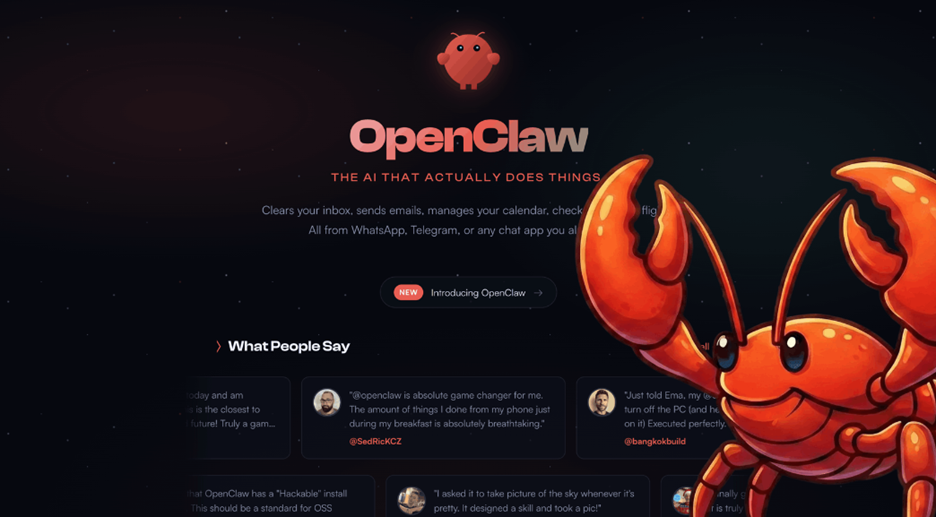
The project was an instant hit. In fact, it was so popular with developers that it racked up 150,000+ GitHub stars in 72 hours.
You can see why Huang would be so struck by that. In fact, NVIDIA recently announced it would launch a product called NemoClaw that would add guardrails to OpenClaw and related open-source AI agents to make them safe for business use.
For years, the AI story has been dominated by models that talk better, search better and generate better.
Useful? Absolutely. Revolutionary? In many ways, yes.
But agents are different. Agents do not just sound intelligent. They can become economically useful.
A chatbot might help you draft a memo. An agent could gather the research, organize the notes, draft the first version, schedule the follow-up meeting, pull the relevant files and keep refining the work until it is done.
To put it simply, a chatbot might help you think, but an agent can help you execute.
And once AI begins doing real work, the implications spread far beyond Silicon Valley.
Think about what that means for a small business owner. An agent could handle customer follow-ups, schedule appointments, update records, prepare invoices and track supplies.
Or how about what it means for a family. It could help pay bills, organize travel, manage schedules, renew subscriptions and stay on top of all the little digital chores that eat up time.
Think about what it means inside a large company. Agents could support legal teams, finance departments, software engineers, sales staffs, call centers and back-office operations. They could work around the clock. They could eventually work in teams. And they could allow one skilled employee to become dramatically more productive.
In short, once AI agents are mainstreamed, we’re essentially talking about a full-blown productivity boom on a scale we’ve never seen.
How to Profit From the AI Reset
The first wave of AI changed how we access information.
This next wave could change how work gets done.
Barely a week seems to go by now without some fresh reminder that the market is beginning to understand that.
In February, fears around Anthropic’s Claude Cowork and related AI automation tools helped trigger a broad software selloff.
Bloomberg reported a $285 billion rout across software, financial services and asset-management stocks after Anthropic released new automation capabilities, while Fast Company said updates to Claude Cowork threatened to replace software tools already embedded in professional workflows.
Now, some of the stocks that were affected by that initial panic have recovered. Some haven’t.
But the point is, this is just a preview of things to come.
That matters because the first phase of the AI boom rewarded almost any company with a halfway believable AI story.
And for a while, it worked.
But I do not think that will be good enough in this next phase. Because once AI starts doing real work, investors will begin to ask tougher questions, like:
- Who really benefits as AI agents become more capable?
- Who has the computing power, the infrastructure and the business model to thrive as AI moves beyond conversation and into execution?
- And just as important, which companies are still living off yesterday’s AI story?
That is where this story gets interesting.
Some companies will adapt beautifully and become even more valuable.
On that side of the equation, I’m specifically looking at the chips, platforms and infrastructure that make the whole agent economy possible.
But others will get exposed – like some of the legacy software names, for example.
That is why I have been paying such close attention to this story – and it’s one of the reasons I recently released a new presentation about what I’m calling the AI Reset.
Because if Jensen Huang is right, and AI agents really are the next major phase of the AI Revolution, then the biggest winners of the next cycle may not be the names most investors expect.
And some stocks that look perfectly safe today may not be nearly as safe as Wall Street assumes.
If you want to see where I believe this is headed, and how I recommend positioning before the crowd fully catches on, I encourage you to watch my latest presentation now.
Sincerely,

Louis Navellier
Editor, Market 360
The Editor hereby discloses that as of the date of this email, the Editor, directly or indirectly, owns the following securities that are the subject of the commentary, analysis, opinions, advice, or recommendations in, or which are otherwise mentioned in, the essay set forth below:
NVIDIA Corporation (NVDA)


