

Hello, Reader.
On August 16, 2009, Usain Bolt ran the 100-meter dash in 9.58 seconds at the World Athletics Championships in Berlin. The time set a new world record (and broke Bolt’s previous one).
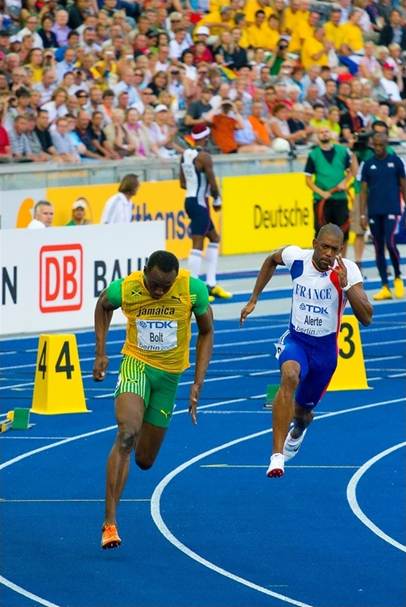
Bolt’s record has stood for nearly two decades. No runner has managed to beat it.
That remains true… ish.
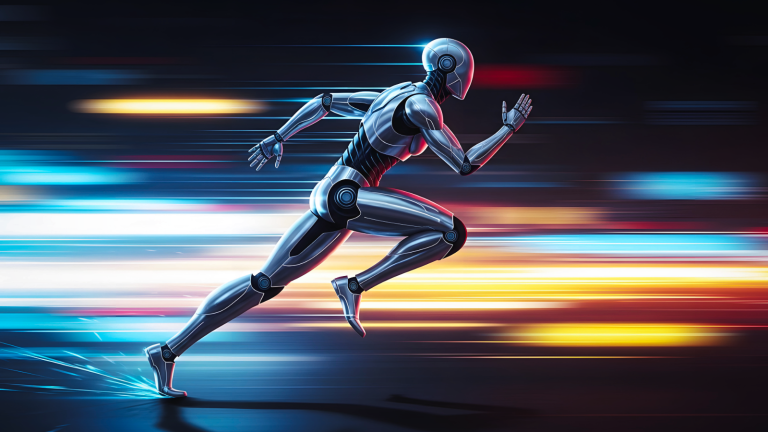
Because 17 years and 1 day after Bolt’s record-breaking sprint, Chinese robotics company Unitree Robotics unveiled a humanoid robot called “Superman.” And the company claims it can run faster than “the fastest man on Earth.”
Superman reportedly reaches a top speed of 12.66 meters per second – faster than Bolt’s estimated peak speed of about 12.4 meters per second.
Unitree debuted Superman on X, in a post that went viral with over 1 million views. You can check it out below.
Superman was a viral stunt to promote Unitree’s IPO, which came two days later, offering a timely glimpse into the market’s growing appetite for humanoid robotics.
So, in today’s Smart Money, I’ll show how that excitement points to something much bigger: As AI moves into the physical world, a whole new wave of investment opportunities could follow.
Let’s get off to the races…
The $50 Billion Robot Bet
Yesterday, the Hangzhou, China-based humanoid robot maker began trading on the Shanghai Stock Exchange’s STAR Market under the ticker 688836. And the results were a sprint right out of the blocks.
Shares were priced at 150.80 yuan but surged as much as 629% during the day, closing at 845 yuan – a 460% gain. That sent Unitree’s market value soaring to roughly $50 billion.
In other words, investors just put a multibillion-dollar price tag on the future of humanoid robotics.
But there is a catch. Commercial deployment of humanoid robots remains in its early stages. And the U.S.-China relationship could create another obstacle, with U.S. regulators moving to restrict imports of Chinese humanoid and four-legged robots on national-security grounds.
Still, those hurdles haven’t stopped investors from putting serious money behind the sector’s future.
Unitree’s IPO now gives investors a public valuation to use as a benchmark for the rest of the industry, especially as several other Chinese robotics companies – including Deep Robotics, Mech-Mind Robotics, and Leju Robotics – pursue listings of their own.
And that’s where the investment opportunity becomes much bigger than any single robot maker. The field is likely to get crowded, and Unitree’s IPO shows just how much investors are willing to pay for a stake in the winners.
So, the bigger opportunity may be in the companies supplying the brains, eyes, muscles, and joints that these machines need.
Betting on the Supply Chain
As humanoid robot production takes off, somebody has to supply every robot with dozens of motors, sensors, actuators, gears, and chips. And there are four things every successful humanoid robot will need:
- Brain: AI processors and software.
- Eyes: cameras, lidar, and other sensors.
- Muscles: motors and motion-control systems.
- Joints: precision gears, bearings, and other components that allow all those parts to move.
These are the picks-and-shovels plays in the physical AI opportunity. And we’ve already seen what can happen when investors start betting on that supply chain.
On July 1, optimism around physical AI drove a rally in component stocks. Investors were looking ahead to a potential humanoid production ramp – particularly around Tesla Corp.’s (TSLA) Optimus program – alongside other company-specific catalysts.
As a result, shares of companies tied to the humanoid-robot supply chain surged as investors looked beyond the robot makers themselves and toward the companies supplying their components.
Ambarella Inc. (AMBA), a “brain” supplier, jumped 28%. Ouster Inc. (OUST) and Cognex Corp.(CGNX), which supply “eyes,” gained 15.6% and 5.9%, respectively. Regal Rexnord Corp. (RRX), the “muscles,” jumped 8.3%. And Harmonic Drive Systems Inc. (HSYDF), the “joints,” rallied 13.1%.
That’s the advantage of the picks-and-shovels approach. Component suppliers can potentially sell to multiple robot manufacturers, meaning they don’t have to predict whether Tesla, Unitree, or another company ultimately wins.
One Race, Many Winners
At the start of a 100-meter race, you could spend your time trying to predict whether anyone will ever beat Usain Bolt’s record. Or you could profit from everything happening on the track.
The AI Revolution is increasingly looking like that kind of race.
There are hundreds of companies sprinting toward the future, and the challenge isn’t simply finding one AI winner. It’s figuring out which opportunities deserve a place in your portfolio, how much to allocate to each one, and how those investments fit together.
That’s exactly why my colleagues Louis Navellier, Luke Lango, and I have gone back through our years of AI research and rebuilt the AI Revolution Portfolio.
We’ve narrowed a huge universe of AI opportunities down to roughly 20 positions – including the companies we believe are best positioned to benefit from the AI Revolution and the infrastructure behind it.
And we’re not just handing you a list of ticker symbols. Each position comes with a specific allocation, giving you a blueprint for how we believe these opportunities should work together.
The last time we did this, our AI Revolution Portfolio gained 58% from its December 2024 rebalance through July 23 – more than twice the Nasdaq’s 25% gain over the same period.
Now, we’re doing it again. And the newly rebuilt AI Revolution Portfolio is live today.
Regards,
Eric Fry


