

Editor’s Note: JR here. On Monday, I went live with three of America’s top investors – Louis Navellier, Eric Fry, and Luke Lango of InvestorPlace – to make a bold new prediction.
We unveiled a powerful breakthrough that tracks Wall Street’s hidden bets… and showed how it could supercharge three of my favorite stocks by 500% or more. For investors, this could mark the beginning of the most profitable stock market window in decades.
I’m making the full replay of this special event – along with three of my highest-conviction stock picks – available to watch free for a limited time. Just click here to view The Profit Surge Event right now.
For months now, the headlines have been trying to take this market down.
First it was surging bond yields and “higher for longer” interest rates. Toss in weak earnings from some of the big names, geopolitical flare-ups, and talk of a looming recession.
And just last week came the fears around AI froth — overstretched valuations, overbought tech, traders too euphoric. If you just looked at the mainstream media, you’d expect this market to be on its knees.
But every time we’ve seen a pullback this year — whether it’s been a 3% four-day slide, or April’s “Tariff Tantrum” 20% correction — this market has come roaring back to set new highs.
The market is sending a message—and it’s not subtle: the foundation is stronger than the headlines want us to believe.
And almost all of this happened before the Federal Reserve made one of its most important announcements in years.
On October 29th, the Fed confirmed what some of us had been suspecting for months: quantitative tightening is ending.
As of December 1st, the Fed will stop shrinking its balance sheet. They’ll begin reinvesting maturing Treasuries and mortgage-backed securities, reversing the slow liquidity drain that’s been weighing on the system since 2022.
That means billions of dollars will start flowing back into U.S. stocks as the Fed shifts from draining money out of the system to putting it back in. More liquidity typically gives investors more confidence — and that can lift stock prices across the board.
This isn’t some minor policy shift. This is a full-blown liquidity pivot that removes what may have been the single biggest headwind markets have faced since this tightening cycle began.
For the past three years, the market’s been climbing with a weight on its back. Now that weight is coming off.
And with more rate cuts likely ahead, these conditions are setting the stage for the next leg up in risk assets. If the market has been this resilient without a tailwind, just imagine what happens when it finally has one.
What Quantitative Tightening Actually Did
Let’s step back. In 2022, the Fed started rolling off billions of dollars in Treasury and mortgage bonds every month. That’s quantitative tightening (QT)—and it’s the opposite of the massive money-printing we saw during the pandemic.
QT works by slowly shrinking the Fed’s balance sheet, draining liquidity from the financial system. It makes credit tighter, borrowing more expensive, and reduces the flow of cash into asset markets. While it’s less dramatic than hiking interest rates, it adds pressure behind the scenes — tightening funding conditions and weighing on valuations.
For the past three years, QT has been a steady drag on financial markets. Not enough to break the bull trend entirely, but just enough to keep risk assets on a leash. Roughly $95 billion per month was being pulled out of the system or roughly $1.4 trillion since quantitative tightening began.
Now that ends. On December 1, those maturing securities will be reinvested instead of allowed to roll off. That means the Fed will no longer be vacuuming reserves out of the system. They’re putting money back in.
No, it’s not quantitative easing … yet. But it’s close enough to matter. Because whether you call it “neutral” or “accommodative,” the end result is the same: more dollars sloshing through the pipes.
When liquidity expands, risk assets rise. It’s that simple.
Then vs. Now
The last time the Fed paused QT was 2019 — right before markets ripped higher into one of the most powerful bull runs we’ve seen. The setup now is eerily similar: slowing growth headlines, cautious Fed rhetoric, and a market bracing for cuts that “aren’t guaranteed.”
Sound familiar?
Back then, QT stopped… and within months, tech stocks and even more speculative corners of the market were on fire.
This pivot feels even bigger.
Back in 2019, the Fed’s balance sheet had never been this large, and rates weren’t this high.
Today, we’re coming off both the steepest tightening cycle and the most aggressive balance-sheet runoff in modern history.
Reversing that pressure — even slightly — will send shockwaves through short-term lending markets like the repo desks that keep Wall Street’s plumbing running. And it heightens the appetite for equity and credit risk.
Reversing that pressure — even slightly — sends shockwaves through funding markets and repo desks. And it heightens the appetite for equity risk and equity risk.
That’s why I’m saying it loud and clear:
Bullish. Bullish. Bullish.
Why Tech Leads the Charge
Let’s take a look at the Nasdaq…
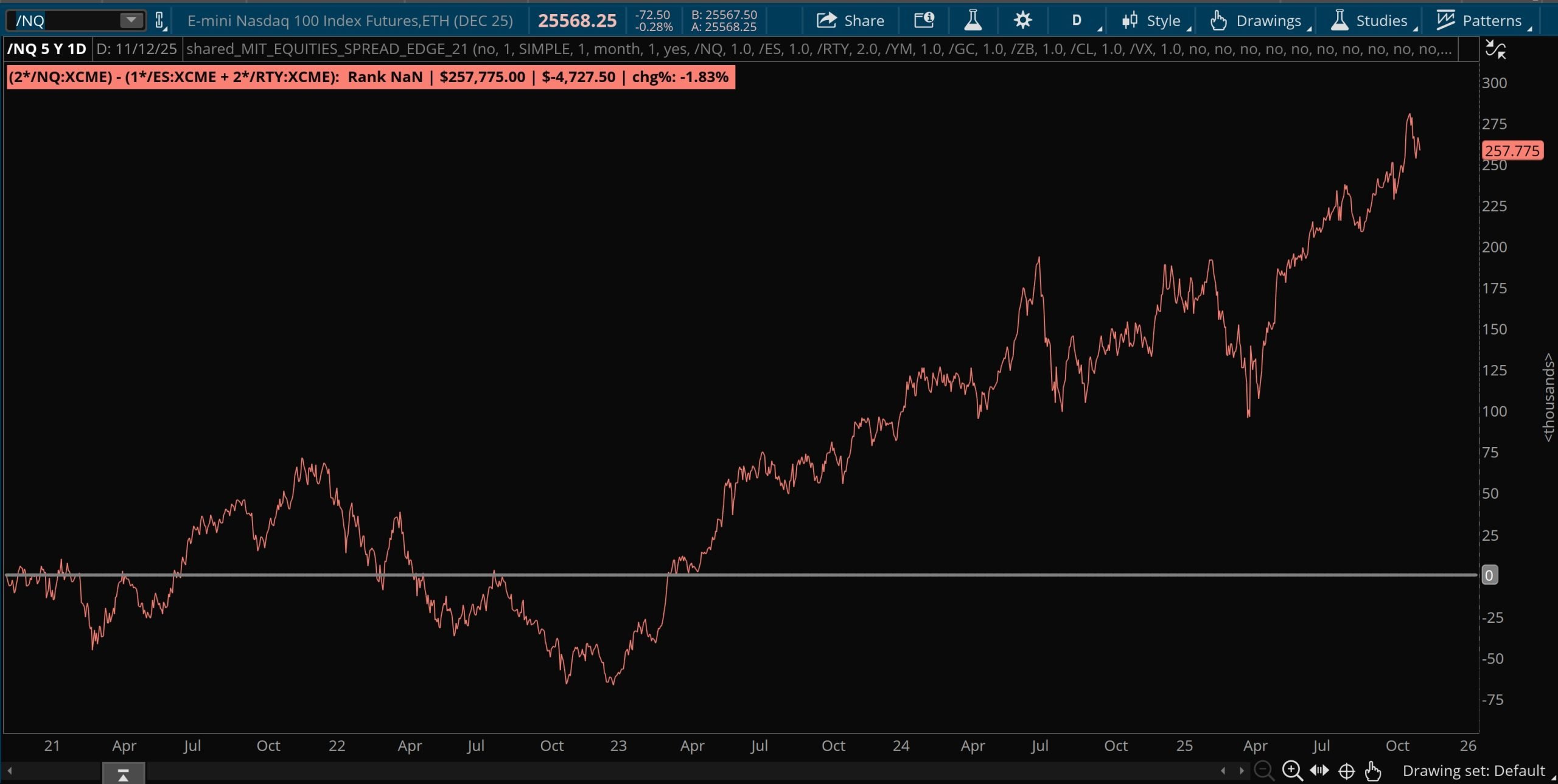
Tech has been unstoppable. For five years, that relative-strength line of the Invesco QQQ Trust (QQQ), which tracks the Nasdaq-100, versus the S&P 500 has gone almost straight up — and as of October, it hit a five-year high.
This isn’t just about “AI hype.” It’s about structural leadership.
When liquidity floods the system, the most innovative, asset-light, cash-flow-rich names tend to outperform. Big Tech has become the ultimate liquidity sink — the place where global capital goes when real yields fall and money needs a home.
So if the Fed is about to loosen financial conditions across the curve, you can bet tech will be the first to react.
AI, quantum computing, uranium, advanced materials — these are all long-duration, high-growth sectors that live and die by the cost of capital. Lower rates and a fatter Fed balance sheet make those future cash flows more valuable.
That’s why I keep saying: this is the moment to stay long innovation.
How This Shapes My Market Outlook
When the Fed adds liquidity, correlations break down. The strong get stronger.
Small-caps might bounce, but the real leadership remains in tech — specifically AI, data-center infrastructure, and the semiconductor complex. That’s why the QQQ continues to crush the Dow and the Russell.
But liquidity doesn’t mean we won’t see volatility. In fact, we live off volatility.
That’s where professional traders make their living — by combining volatility with the leverage of options and following institutional order flow to help turn small moves into outsized returns.
When I say I’m bullish, that doesn’t mean “buy and forget.” It means I’m positioning for directional opportunities while keeping my risk defined.
That’s the difference between gambling and trading.
If you haven’t seen the Profit Surge Event yet, you’re missing the most important conversation I’ve ever had about trading. In that session, I reveal the simple tweak that’s helped everyday traders turn small, focused bets into extraordinary gains.
This exact approach is what allowed my Advanced Notice advisory to collect returns of 108% on Comstock Resources Inc. (CRK) and 99% Grindr Inc. (GRND) just last week.
You’ll also hear from Louis Navellier, Eric Fry, and Luke Lango as we discuss how this strategy can amplify their top stock ideas by 500% or more.
It’s the blueprint my community is using right now to trade smarter, faster, and more creatively. You can watch the entire presentation – and get access to a free report detailing my highest-conviction trading setups right now – by clicking right here.
The Bottom Line
The Fed is ending its three-year liquidity drain. QT is over. Rates are headed lower. That combination is pure rocket fuel for risk assets — especially tech.
There will be noise. There will be corrections. But the overall direction of this liquidity shift is up.
Trade small. Trade smart. Stay creative.
Because this is where the next great bull leg begins.
Remember, the creative trader wins.
Regards,
Jonathan Rose


