Listen to the audio version of this article (generated by AI).
How to catch Louis Navellier and Jonathan Rose for free… a blowout jobs report corners the Fed… why the best Elon Musk trade may not be Elon… Brian Hunt on how to play robotics’ hidden monopoly
The market is watching the wrong AI bottleneck today.
That’s the take of legendary investor Louis Navellier. And if he’s right, it changes where the smart money goes next.
This was one of the topics that Louis and veteran trader Jonathan Rose dove into this morning, when Jonathan hosted Louis on his Masters in Trading Live show.
Everyone’s fixated on chips and copper as the choke points for the AI buildout. But Louis says the real squeeze is somewhere else that many investors aren’t looking – and he laid out why it gets worse into 2027, not better. It’s the kind of call that looks obvious only in hindsight.
This was just one topic from this morning’s free episode…
Louis also revealed where he’s putting money to work in energy today (hint: it’s not just oil itself). And he took investors under the hood of the S&P’s eye-popping 53% earnings quarter to explain why he thinks near-term momentum has already peaked – and what that means for how he’s picking stocks right now.
If you missed it, you can catch the free replay of the show right here.
And if you’re not taking advantage of these free daily episodes, I want to put them on your radar. Jonathan publishes them every day that the market is open at 11 a.m. ET. He profiles market trends, explains entries and exits, discusses the opportunities he’s watching in real time, and offers plenty of tickers along the way. You can sign up right here to receive daily reminders and links to the upcoming episodes.
Back to today’s episode, it was a great listen with plenty of action steps from two of the best in the business. Again, you can check it out right here.
The fallout from last Friday’s jobs report
On Friday, the Labor Department reported that the U.S. economy added 162,000 jobs in August – roughly triple the 53,000 that economists surveyed by the Wall Street Journal had estimated. And the two prior months – both ugly – were revised higher: July flipped from a reported loss of 23,000 jobs to a gain of 21,000. Meanwhile, the unemployment rate held at 4.1%, a historically low reading.
To be fair, some of the strength looks like noise. A big chunk came from rebounds in restaurant hiring and local-government education – categories many economists chalked up to one-off swings. But even setting those aside, the data reveal a labor market that refuses to roll over.
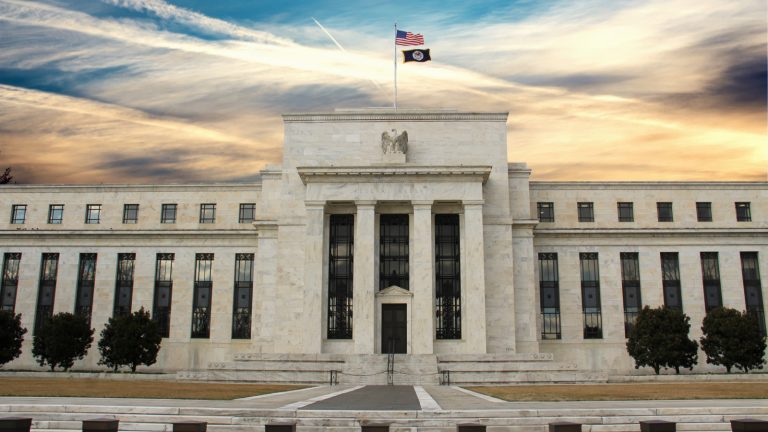
Now, Federal Reserve Chairman Kevin Warsh has said the inflation data, more than anything else, will drive the Fed’s decision at next week’s FOMC meeting. But the labor market is what could hold the Fed’s hand. Raising rates into a visibly weakening job market is risky business; it invites recession.
So, a soft August jobs report could have handed the doves a ready-made objection – why tighten into weakness? This was why – last week – Louis told his Growth Investor subscribers, “We want to root for a weak payroll report because it would cause the Fed not to raise rates in September.”
Friday’s number clearly wasn’t “weak.” So, while it didn’t assure a rate hike, it certainly didn’t provide a reason not to hike.
Everything now points to this Friday, when the August Consumer Price Index (CPI) lands – the last major data point before the Fed meets next week. Here’s Bloomberg Economics on what that sets up:
The strong August jobs report raises the risk of a Fed rate hike in September.
It leaves the August CPI report (due Sept. 11) as the determining factor — and we expect that reading to be just borderline acceptable to the doves.
The September FOMC meeting is shaping up to be a very close call.
As traders bet on a hike, President Trump is demanding a cut
Before Friday’s report, the CME Group’s FedWatch tool put the odds of a September rate hike at 49%. By Friday afternoon, those odds had jumped to 60%.
One very important person is not on board…
Within hours of the report, President Trump took to Truth Social to demand the opposite of what the market is now bracing for:
Great jobs number just announced, breaking all estimates (except mine!) by double and triple…
A STRONG COUNTRY MEANS A LOWER INTEREST RATE – IT’S A BETTER CREDIT…Very simple!…
LOWER THE RATE OR I’LL STOP TRADING WITH COUNTRIES WITH WHICH WE HAVE A DEFICIT…
The Fed Board, with its great new leader, must get smart – BE PATRIOTS for a change.
He’s not alone – Vice President JD Vance called for lower rates last Thursday, saying:
We’re doing a lot of things to try to keep those interest rates down, but it would be nice to have some help from the Federal Reserve.
As someone who would like lower rates – or at least, not higher rates – I scratch my head at these pressure tactics and their likely effectiveness.
Wall Street and opponents of the Trump administration are sensitive to any appearance of White House pressure, seeing the Fed’s independence as paramount. Given this, these calls to cut rates seem to put the Fed members in a bind – they risk the exact outcome the White House doesn’t want…
If the Fed holds rates steady next week on a close call, the members who voted to hold could look like they caved to Trump and Vance. So, it’s reasonable to think some of them, precisely because they don’t want to appear influenced, might vote to hike instead.
In any case, we’re headed for a genuine collision. The data are making a defensible case for a hike. The president is threatening trade partners to force a cut. And the number that determines what happens – the CPI – lands on Friday.
We’ll report back.
The most interesting Elon Musk trade…
There’s a pattern that runs through every technology boom, and it’s worth a minute even if you never buy a single stock because of it.
The pioneer who breaches a new frontier gets the headlines. But some of the biggest fortunes go to the unglamorous companies that the pioneer depends on to make the vision a reality.
For example, Halliburton (HAL) outran Exxon (XOM) during the offshore oil boom. And a 150-year-old glassmaker named Corning (GLW) quietly helped make the first iPhone possible. Different eras, same lesson: when a giant charges into new territory, the smart money watches the suppliers who are making it possible.
If you’ve read the Digest over the last week, you know that our technology expert Luke Lango has spent months applying this idea to the most ambitious builder of our age – Elon Musk.
Between Tesla (TSLA), SpaceX (SPCX), xAI, and X, Musk is assembling what Luke calls a “Vertical AI” empire – an effort to drag AI out of our screens and into the physical world of robots, cars, satellites, and factories. It’s staggeringly ambitious. But here’s the tie-in…
For all his vertical integration, Musk can’t manufacture every chip, sensor, motor, magnet, and networking part his empire will devour. He must buy them – by the thousands.
“From whom?” is what Luke is after. Here’s how he puts it:
When Musk starts spending to build something new, I want to know who’s cashing the checks.
It’s been a lucrative question that Luke has asked before. He’s recommended 33 stocks tied to Musk’s businesses that went on to double or better at their highs afterward.
Now, Luke thinks the clock is ticking on new opportunities. He’s circled September 24 – a date he believes could remove an important obstacle to Musk’s next big move.
He’ll pull back the curtain on those details tomorrow at 8 p.m. Eastern, when he hosts a free workshop alongside Louis and Eric Fry. You can reserve your seat right here. Luke will be giving away the name and ticker of one supplier stock free, just for showing up.
If you’ve ever wanted to invest alongside Elon Musk without simply buying TSLA or SPCX, tomorrow’s workshop will highlight your roadmap. Reserve your free seat here, and we’ll see you at 8 p.m. Eastern.
Now, speaking of following the suppliers…
The robot boom has a hidden supplier monopoly – and it’s Japanese
Luke’s point is to invest in the picks-and-shovels plays that help make those massive products. Our senior analyst Brian Hunt, editor of Money & Megatrends, is recommending doing exactly that on one of the most tangible corners of Musk’s shopping list – the physical guts of the robots themselves, including the Optimus humanoids Tesla is racing to mass-produce.
Brian has been covering what he calls the Robotics Revolution since 2024, and the scale is getting hard to ignore. Here’s Brian:
Last year, Amazon announced it uses more than one million robots across its business. This figure will soon exceed the company’s number of human employees.
His angle isn’t to guess which humanoid maker wins. It’s to own the companies making the precision parts every robot needs – the joints, gears, motors, and bearings – no matter whose logo ends up on the machine.
But here’s the wrinkle from Brian: the U.S. long ago ceded that manufacturing, so the best suppliers are mostly Japanese:
The robotics revolution is global but many of the supply chains run through Japan.
He points toward one company that few here in the U.S. have heard of: Nabtesco (6268), a $3.4 billion firm that controls nearly 60% of the market for cycloidal reducers (the heavy-duty gearboxes buried inside robot joints).
Back to Brian:
When a large robot is carrying a heavy box across the factory floor, the cycloidal reducer is a key component that enables the robot to do so repeatedly without joint wear or loss of precision.
If humanoids scale the way Musk and others are betting, orders for parts like these could swamp the handful of firms that dominate them – the same squeeze that has sent optical-networking and memory stocks soaring over the last 12 months.
Nabtesco is just one of four Japanese suppliers Brian names. You can get the other three – free – in his free issue right here.
And for more from Brian, you can sign up for his Money & Megatrends newsletter right here. Every day the market is open, he delivers actionable insights loaded with specific stock tickers – and it’s 100% free.
We’ll keep you updated on all these stories here in the Digest.
Have a good evening,
Jeff Remsburg


