

Hello, Reader.
On Tuesday, the United States and Iran agreed to a conditional two-week ceasefire.
The deal comes after weeks of intense conflict among Iran, the U.S., and Israel that has seen drone strikes across the Middle East, attacks on oil infrastructure, and a disruption of global shipping and energy markets.
Now, declaring victory in an oil market crisis because of a two-week ceasefire is a little like leaving the emergency room because your painkillers kicked in.
The underlying injury hasn’t healed. The surgery hasn’t happened. And the doctor is already warning you that the anesthesia wears off fast.
This week’s relief rally in markets – and the brutal selloff it triggered in energy stocks – reflects the medicine, not the prognosis.
The prognosis for global oil and gas markets remains deeply unsettled, and investors who panic out of their energy positions may find themselves on the wrong side of one of the most consequential structural shifts in the history of global energy markets.
So, in today’s Smart Money, I’ll detail the five reasons why oil and gas won’t normalize anytime soon.
Then, I’ll share why the recent ceasefire-driven selloff is hiding bigger supply problems that will likely keep oil and U.S. natural gas prices higher for longer… and why that means the energy bull market isn’t over.
Why the Oil Markets Remain Unsettled
1. Ceasefires Are Notoriously Fragile
Brief ceasefires have a poor track record of becoming permanent peace. They are like the interval between rounds of a boxing match – once the bell signals a return to center-ring, the punches fly furiously once again. In this particular boxing match between the U.S.-Israeli coalition and Iran, any lasting peace deal must overcome a massive trust deficit.
2. The Tanker Backlog Won’t Clear in Two Weeks
Even if the ceasefire holds perfectly from this point forward, the physical plumbing of the global oil market doesn’t repair itself overnight.
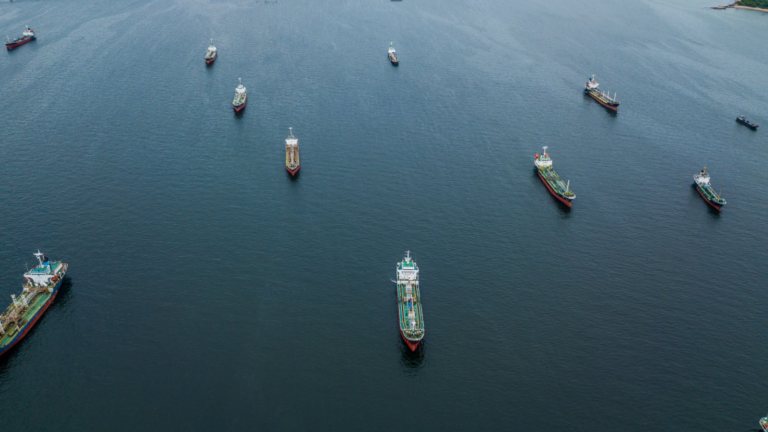
Roughly 187 tankers, laden with 172 million barrels of seaborne crude and refined oil products, remain mired inside the Persian Gulf. Another 800 ocean-going vessels of various types are also clogging shipping channels in the Gulf. Clearing a backlog of that size would likely take more than two weeks, even under normal conditions, according to Daejin Lee, global head of research at Fertmax FZCO.
3. Iran Now Controls the Toll Booth
Even in the best-case ceasefire scenario, Iran appears to have permanently altered its relationship to the Strait of Hormuz. The country is now a toll-taker.
In recent weeks, Tehran has been charging shipping companies as much as $2 million per tanker to guarantee safe passage through the strait. That’s a major revision to the maritime chokepoint’s previous status as a toll-free route. Now that Iran has discovered this “easy money,” it will not likely surrender it without compensation.
4. The Physical Infrastructure Is Damaged
The energy market seems to be viewing the Iran conflict as merely a logistical disruption. But the physical disruption is far more serious and long-lasting. The war-related damage stretches across the entire Gulf, from Kuwait to Qatar to the UAE, accumulated over six weeks of relentless strikes on energy infrastructure.
5. Aggressive Restocking Will Accelerate Demand
The final reason “normal” is not coming back soon is behavioral.
Countries that were caught flat-footed by this crisis are not going to walk away without building bigger strategic reserves and diversifying their supply chains. Energy and commodity markets are likely to remain on a structurally higher floor regardless of the ceasefire outcome, said BCA Research’s U.S. Political Strategist Matt Gertken. As governments hoard and restock in anticipation of renewed conflict, that persistent demand will keep oil and gas prices elevated well above pre-war levels, even in a scenario where shipping resumes.
Here’s the part of this story that gets genuinely interesting for energy investors…
The Hidden Winner: U.S. Natural Gas
While oil is grabbing all the headlines, the real strategic beneficiary of this crisis is U.S. natural gas – and those prices are actually lower than they were when the war started.
Why? Because U.S. natural gas prices are set primarily by domestic supply and demand. And right now, American gas production is running at record levels, with more gas coming out of the ground than at any point in history. That abundance has kept a lid on prices at home.
But the global picture is the exact opposite. European gas prices have more than doubled since the war began. Asian liquefied natural gas (LNG) benchmarks have surged. The result is a historic and growing spread between cheap domestic U.S. gas and the desperate global buyers who need it.
That spread is not going away. It’s the foundation of a long-term structural shift.
The United States is the world’s largest LNG exporter, and with the largest available incremental LNG capacity, U.S. producers are positioned to play a critical role during this historic disruption.
Even if the ceasefire leads to a genuine peace accord, the global oil and gas market will remain a “sick patient” for many months.
Meanwhile, the demand side of the market will undergo an important structural change. Countries and companies that used to be comfortable with a “just in time” approach to oil inventories will adopt a “just in case” approach.
They will stockpile. They will diversify energy sources. They will sign long-term contracts with suppliers who sit outside the blast radius of the Middle Eastern conflict.
That means U.S. LNG. That means U.S. producers.
And that’s why, in my Fry’s Investment Report portfolio, I recommend three energy companies that can capitalize on their geographically desirable crude production and robust natural gas production potential.
They are…
- A large U.S. shale producer known for disciplined capital returns and a variable dividend strategy.
- A smaller, growth-oriented U.S. oil producer focused on efficient drilling in a few core basins.
- The largest integrated energy company in Argentina, combining upstream production with refining and fuel distribution.
To learn more about the opportunity each of these companies present, click here.
Regards,
Eric Fry


