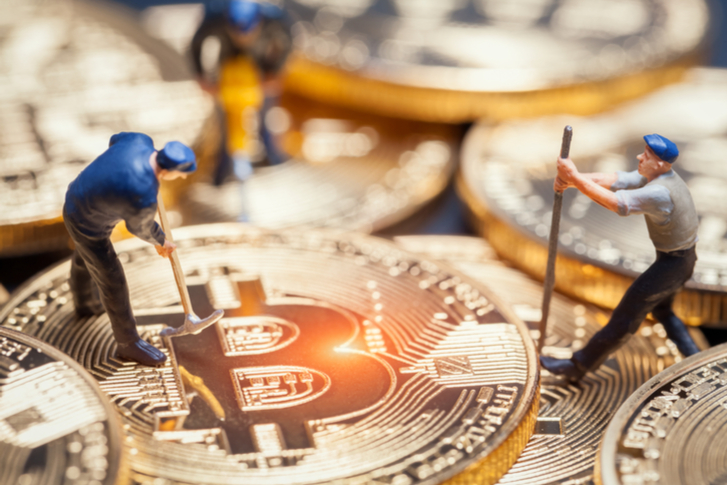
Reporting on bitcoin and other cryptocurrency now reminds investors of the dot-com bubble.
The dot-com bust, as reflected in the NASDAQ average, began in March 2000 at about 5,000, and ended in September 2002 at about 1,500. Most of the collapse happened during the bust’s first year. The NASDAQ traded at around 1,900 in March 2001.
In the case of bitcoin, the peak came last December at almost $20,000, and bitcoin was trading at about $5,900 on June 29. This fall has been even shorter and sharper than the one in dot-com stocks.
The dot-com story ended well — if you weren’t in a company like Pets.Com that went to zero. Holders of good tech stocks like Microsoft (NASDAQ:MSFT) and Amazon.com (NASDAQ:AMZN) eventually recovered, and were able to ride the market to new highs on the cloud boom.
Any There, There for Bitcoin?
There are two key differences between then and now.
First, we don’t know if there’s a there in bitcoin or not. It’s an encryption key. It doesn’t make anything. In this way it’s like gold, only without the glitter.
Second, bitcoin has not been very liquid. One thing bitcoin bulls like to tell me these days is that many people got bitcoin for practically nothing. If you bought into bitcoin a year ago, the price was about $2,500. You’re still in the money. Bitcoin was still trading below $1,000 in early 2017.
That’s important to remember when you’re asking whether the bitcoin market has “washed out.” Most bitcoin holders are still sitting on gains, not losses. They see no reason to be scared. Bitcoin prices have been falling on low volume. One large trader recently got out of a position worth $290 million while paying just 4 cents.
Still, reports that once set off a trading frenzy, like Tether printing 250 million tokens, or predictions bitcoin will gain wide adoption, aren’t moving crypto prices higher.
The reason is simple. It took little real cash to send Bitcoin higher in 2017. People hold, the price goes up on light volume, and they hold tighter.
Now, with prices having fallen and with plenty of trading capacity available, it will take real money to lift prices, and with most owners still sitting on gains, but most traders sitting on losses, that money just isn’t coming in.
Bitcoin’s ICO Problem
If you did buy bitcoin today, what would you do with it?
The answer last year was to buy into an Initial Coin Offering, or ICO. But most ICOs never went anywhere. Many were outright scams.
China, the center of the boom,
has banned them. While you can sell a bitcoin on many markets, most ICO tokens have no market. You don’t need an ICO to write an app, anyway.
Gold has uses beyond speculation. You can make jewelry with it. It’s a great conductor of electricity and has been used in electronics.
But bitcoin has none of these uses. Its primary use is as an intermediary, between investors and investments. But if the investments are garbage, why are you buying the intermediary?
There are lots of promises for fixing the ICO market, ranging from technical solutions to “light touch” regulation. But billions of dollars have already been lost on these things, much of it to thieves, and even an ICO that claimed to be fighting scams turned out to be a scam.
So long as the ICO market remains a “buyer beware” proposition, every investor needs to beware of bitcoin and every other cryptocurrency. Give me something worth buying with bitcoin and I’ll buy bitcoin. But I don’t see any Amazons in the ICO market.
Dana Blankenhorn is a financial and technology journalist. He is the author of a mystery novella involving Bitcoin, The Reluctant Detective Saves the World, available now at the Amazon Kindle store. Write him at danablankenhorn@gmail.com or follow him on Twitter at @danablankenhorn. As of this writing he owned shares in MSFT and AMZN, but no cryptocurrency. To follow the value of cryptocurrencies bookmark https://coinmarketcap.com/


