

Listen to the audio version of this article (generated by AI).
One of the biggest differences between retail investors and professional traders is the question they ask first.
Most investors will ask, “What stock should I buy?”
Professional traders ask, “What else moves if this story becomes important?”
That distinction matters enormously during major technological shifts.
And it’s exactly what I was thinking about earlier this week while my livestream chat became obsessed with Elon Musk’s Neuralink project.
Not Tesla Inc. (TSLA). Not the SpaceX IPO. Not xAI chatbots.
Brain implants.
The chat was flying: “When’s the IPO?” “How do we invest?” “Is there a ticker yet?”
Honestly, I get it. The idea sounds like science fiction. Tiny devices connecting computers directly to the human brain. People controlling machines with thought alone.
How amazing would that be?
It’s the kind of story the media and Wall Street immediately become obsessed with.
But here’s the part that caught my attention.
At almost the exact same time Musk is pouring money into Neuralink, Sam Altman is backing another brain-computer startup. Two billionaires. Two of the most powerful people in technology are suddenly racing into the exact same sector.
When that happens, traders pay attention.
Not because we think we’re going to wake up tomorrow with a Neuralink IPO ticker. But when smart money starts flooding into a brand-new industry, the real opportunities often appear around the edges of the headline before the public even realizes there’s a trade developing.
Bruce Lee had a line that perfectly captures how traders should think about opportunities like this one:
It is like a finger pointing away to the moon. Don’t concentrate on the finger, or you will miss all that heavenly glory.
So instead of asking: “How do we invest in Neuralink?”
When we see money flooding into a new sector, we should be asking completely different questions:
- Who builds the chips?
- Who makes the microscopes?
- Who supplies the memory?
- Which public companies benefit if this entire sector suddenly gets repriced higher?
That’s the framework.
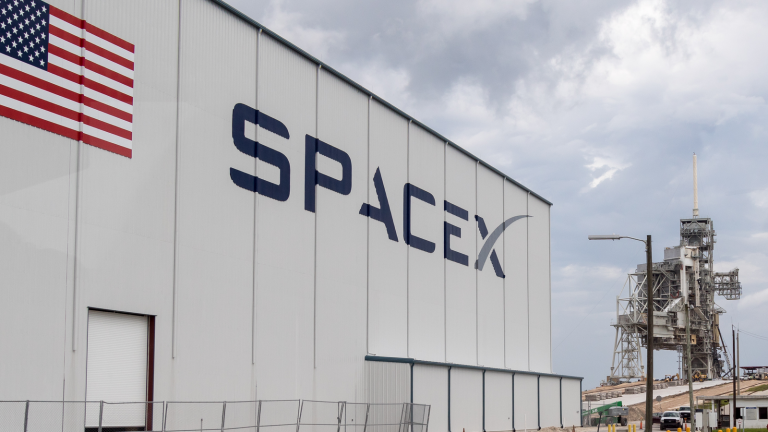
And honestly, it’s the exact same pattern of behavior we saw earlier this week with the coming SpaceX IPO .
Too many investors never make it past what’s directly in front of them. They’re going to focus entirely on SpaceX itself. The date. The ticker. The valuation. The hype.
Meanwhile, the smart money is already starting to move into the “family” surrounding the story. That’s where the second-order trade often lives.
And that’s what I want to show you today.
In this piece, I’m going to explain how professional traders think about “family” trades during massive IPO cycles…
Show you three publicly traded stocks already connected to the SpaceX thesis…
And explain why the real edge comes from waiting for confirmation from the smart money before the crowd catches up.
The Family Trade
Floor traders learn very quickly that markets move in clusters. Nothing trades in isolation.
Everything has a family:
- If semiconductors move, suppliers move.
- If AI spending explodes, infrastructure moves.
- If uranium rallies, utilities and miners move.
- And if SpaceX eventually IPOs at the kind of valuation Wall Street expects, the companies surrounding that ecosystem are going to get repriced too.
That’s the game. And once you start seeing the market that way, you stop chasing headlines and start looking for relative value instead.
That’s exactly what’s happening around SpaceX right now.
Alphabet Inc. (GOOGL) is one of the most overlooked names tied to the thesis. Most investors still think of Alphabet as a search-and-cloud company. But Alphabet also owns a significant stake in SpaceX that suddenly becomes much more visible once SpaceX starts trading publicly. That’s the kind of hidden exposure Wall Street often ignores… until suddenly everybody notices it at once.
Rocket Lab USA Inc. (RKLB) is another interesting “family” trade because the moment Wall Street starts assigning enormous valuations to reusable rockets and orbital infrastructure, analysts are forced to rethink what the public peers should be worth too. The comparable set changes overnight.
Then there’s AST SpaceMobile Inc. (ASTS), which sits directly inside the satellite-connectivity story that SpaceX’s Starlink system helped create in the first place. If investors suddenly decide space-based communications deserves dramatically higher valuations after the SpaceX roadshow begins, names like ASTS immediately get pulled into the conversation.
Now here’s where even smart investors make a mistake. They find the family, buy the stocks, and hope.
That’s not a terrible idea, but that’s not how I trade. Because stories and ideas alone are not enough.
And honestly, this is one of the biggest lessons I learned after 28 years trading futures, bonds, and options professionally:
Sometimes the narrative is completely right… and the trade still fails because the big money never actually confirms the move.
The Confirmation Layer
That’s why I focus so heavily on unusual trading activity.
Big money leaves footprints.
When that big money starts aggressively building positions in names most retail investors barely know yet, that activity tends to show up before the headlines fully catch up. That’s the signal I’ve built my system around from the beginning.
But over the last year, I realized something important: Finding the signal was only half the job.
I’m very good at identifying unusual trading activity and volatility. I’m very good at finding where the smoke is building before the crowd sees it. But direction? Bullish or bearish?
I’ve said this openly to my members for years: Sometimes direction is a coin flip.
That’s exactly why partnering with Marc Chaikin made so much sense.
Marc spent decades building institutional money-flow tools used everywhere from Bloomberg terminals to professional research desks. My tools identify where unusual positioning is building in trading activity. Marc’s Money Flow tools confirm whether institutional money in the underlying stock is flowing the same direction.
When both signals line up, that’s what Marc and I have started calling the Convergence Trigger. It’s completely changed how I think about second-order trades like this.
Because now we’re not just asking: “Is this stock connected to the SpaceX story?”
We’re asking: “Is big money actually accumulating this name right now?”
Huge difference.
And right now, parts of the SpaceX family are already starting to show that confirmation layer — especially inside infrastructure, AI compute, satellite connectivity, and the quieter derivative plays most investors still are not paying attention to.
Once you understand how to think this way, you start seeing the market differently:
- What’s the second-order effect?
- Which names forgot to move?
- Where is institutional money quietly accumulating?
- Which setups are actually being confirmed?
That framework works almost everywhere.
Marc and I went live Thursday night to break down exactly how we’re using our Convergence Trigger to identify these kinds of setups right now — including several names connected to the SpaceX and AI infrastructure trades already flashing on our screens.
If you missed the live event, you can catch the full replay right here.
The creative trader wins,
Jonathan Rose
Founder, Masters in Trading
P.S. Jonathan Rose has a very different way of looking at the market than most analysts — and honestly, that’s probably why his work has been getting so much attention lately. Instead of chasing headlines, he focuses on where institutional money may already be quietly positioning before the crowd catches on. That’s exactly what he and Wall Street veteran Marc Chaikin discussed during their Convergence Summit event Thursday night. If you missed it live, you can catch the replay right here.


